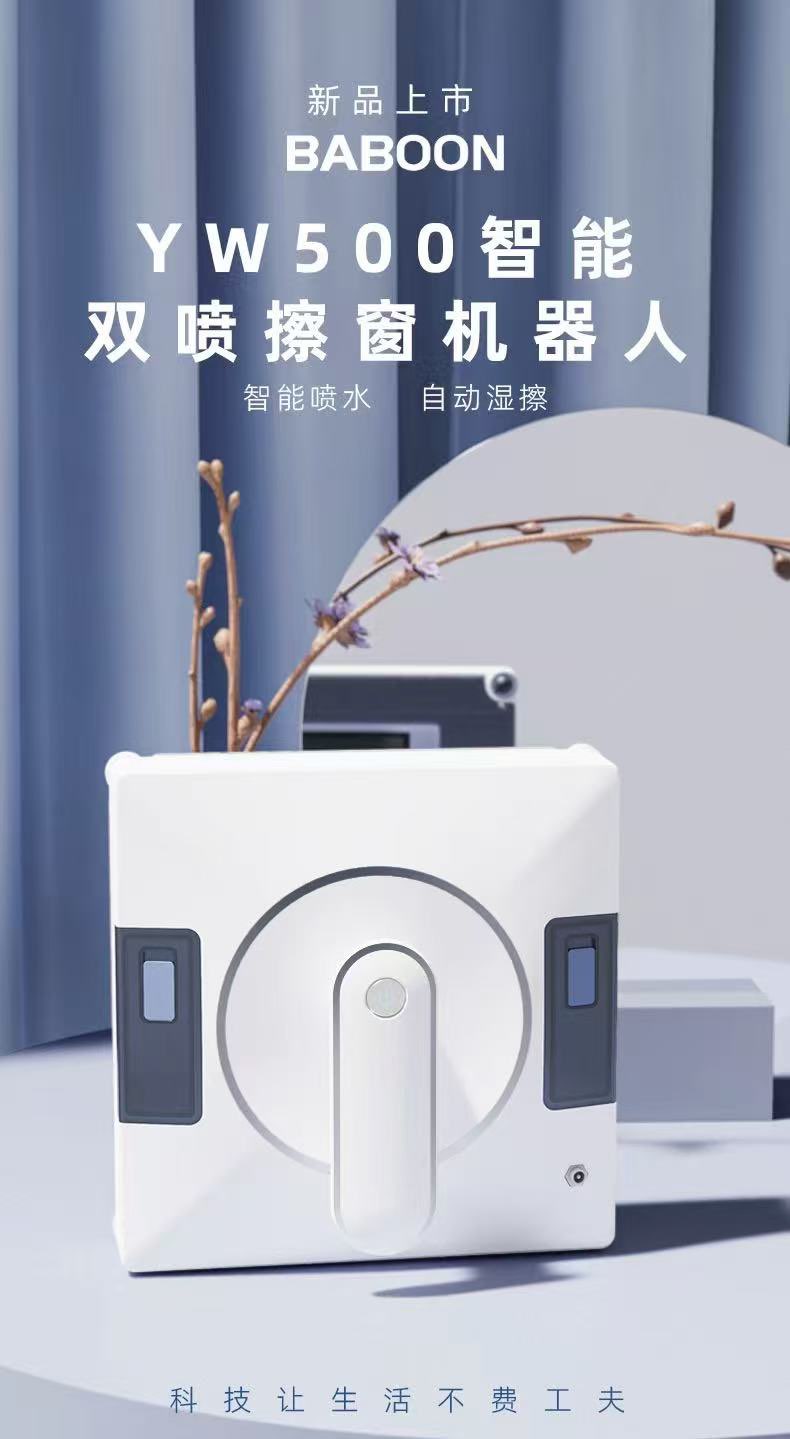
Window-Cleaning Robot: Product Introduction
Window-cleaning robots have become one of the fastest-growing categories in smart home cleaning. They free us from the dangerous and tedious chore of cleaning high-rise windows. Today's mainstream products are highly mature, with significant advancements in suction power, intelligent navigation, and safety features. Below is a detailed introduction.
I. Core Problem Solved
Cleaning exterior windows in high-rise apartments has always been a cleaning blind spot. Doing it manually is not only time-consuming and labor-intensive but also extremely dangerous for those living on upper floors. The core value of a window-cleaning robot lies in replacing manual labor with machines, transforming a hazardous high-altitude task into a simple one-click operation controlled from the ground.
II. Leading Brands and Products
The two dominant brands in the market are Ecovacs and Dreame, both known for their strong technological capabilities and market performance.
- Ecovacs Winbot Series: As a pioneer in the industry, Ecovacs launched its first window-cleaning robot in 2011. Its latest flagship, the Winbot W3, represents the high-end standard, featuring an industry-first all-in-one station that enables a fully hands-free mopping experience. It was showcased at CES 2026.
- Dreame C1 Series: Dreame has seen rapid growth, with its C1 and C1 Station models gaining significant market share due to their powerful technical specifications. According to 2025 data, Dreame held the top spot in e-commerce sales for window-cleaning robots in Southwest Europe.
Additionally, brands like Shanxi Jiasida have strong R&D capabilities in specific technologies (e.g., circular body designs, bionic wiping), holding a notable share of the market.
III. Key Technical Specifications
To give you a clearer understanding of product performance, here's a comparison of core technical specifications:
| Technical Dimension | Mainstream High-End Specs (e.g., Dreame/Ecovacs) | Key Function |
|---|---|---|
| Suction Power | 8000Pa - 10000Pa | The core of safety. High suction ensures the robot remains firmly attached even at high altitudes, preventing falls. |
| Cleaning Coverage | 99.99% corner coverage, edge distance ≤ 1mm | Uses elastic brushes or flexible edge technologies to solve the common problem of square robots missing corners, ensuring no blind spots. |
| Power & Runtime | Approx. 60-110 minutes per charge; base station models support uninterrupted operation | The base station contains a battery, allowing the robot to move without being constantly plugged in, eliminating the hassle of plugging/unplugging when switching windows. |
| Smart Navigation | AI path planning (Z/N/back-and-forth patterns), resume-after-interruption | The robot autonomously plans its route. If power is lost or the task is paused, it can resume where it left off, avoiding redundant work. |
| Cleaning System | Constant-pressure water tank/pulse water spray, bionic hand wiping | Mimics the manual process of "breathing on glass, swinging, and wiping" — wetting dirt to soften it before wiping clean, reducing water streaks. |
IV. Latest Industry Trend: All-in-One Base Stations
A major pain point for older window-cleaning robots was "washing the mop pads" and "repositioning the robot". High-end current models (like the Ecovacs W3 and Dreame C1 Station) are introducing all-in-one base stations, similar to those in robot vacuums:
- Hands-Free Mop Washing: After the robot returns to the station, the station automatically cleans the mop pads using spray, brushing, and scraping, achieving a dirt removal rate of up to 96%.
- Automatic Cord Management & Storage: The station features an automatic cord retractor, preventing tangles and serving as a storage base for the robot, keeping the balcony tidy.
- Uninterrupted Operation: The base station has a built-in battery, allowing the robot to clean multiple windows without frequent manual plugging/unplugging, improving the continuity of cleaning.
V. Buying Guide
- Safety is the Top Priority: Beyond suction power, pay attention to safety mechanisms. Good robots should have power-off protection (remaining attached for over 30 minutes after power loss), a safety tether, and pressure sensors that monitor adhesion status in real-time.
- Robot Thickness: If you have security bars or screens on your windows, choose a slim model (around 6 cm thick) to easily maneuver between the bars and clean the exterior glass.
- Noise Level: Operating noise is typically around 65 decibels. High-quality models manage noise through optimized motors while maintaining strong suction.
- Applicable Scenarios: Beyond glass, check if the robot can clean other smooth surfaces like seamless tiles or marble walls. Some models can also clean bathroom mirrors and walls.
VI. Summary
Window-cleaning robots have evolved from a novelty gadget to a practical household tool. If you're tired of the annual spring-cleaning window chore or live in a high-rise and are concerned about safety, investing in a window-cleaning robot is a smart choice. Currently, market penetration remains below 5%, indicating a rapidly growing market. Choosing a model with strong suction, a self-cleaning base station, and comprehensive safety features will provide years of convenience with just the push of a button.
擦窗机器人是近年来增长最快的智能清洁品类之一,它将我们从危险、繁琐的高空擦窗劳动中解放出来。目前市面上的主流产品已经非常成熟,从吸附力、智能规划到安全性都有了很大提升。以下是关于擦窗机器人的详细介绍:
一、 核心解决痛点
高层住宅的外窗清洁一直是家庭清洁的“死角”。人工擦窗不仅费时费力,对于住在高层的用户来说更是高危作业。数据显示,春节前家政擦窗订单能激增2.7倍,这反映出巨大的供需缺口。擦窗机器人的核心价值就在于用机器替代人工,将危险的高空作业转化为一键操作的地面控制。
二、 主流品牌与产品
目前市场上两大主流品牌分别是 科沃斯(Ecovacs) 和 追觅(Dreame),两者在技术和市场表现上都非常强劲。
- 科沃斯(Ecovacs)窗宝(Winbot)系列:作为行业的先行者,科沃斯在2011年就推出了首款擦窗机器人。其最新旗舰产品窗宝W3代表了行业的高端水平,搭载了行业首创的全能基站,实现了“免手洗抹布”的全托管体验,并在2026年CES展上亮相。
- 追觅(Dreame)C1系列:追觅是近年来增长迅猛的品牌,其C1与C1 Station产品凭借强大的技术参数在市场上占据一席之地。根据2025年的数据,追觅擦窗机器人在西南欧电商平台持续保持销量榜首。
此外,山西嘉世达等品牌也在特定技术领域(如圆形机身、仿生学擦拭)拥有很强的自主研发实力,市场份额占比颇高。
三、 核心技术参数
为了让你更直观地了解产品性能,以下为核心技术指标对比:
| 技术维度 | 主流高端参数(以追觅/科沃斯为例) | 核心作用 |
|---|---|---|
| 吸附力 | 8000Pa - 10000Pa | 这是安全的核心。足够强的吸力确保机器在高空(甚至8级大风)下也能牢牢吸附,防止坠落。 |
| 清洁覆盖 | 99.99% 窗角覆盖率,贴边距离 ≤ 1mm | 通过弹力刷或灵隙贴边技术,解决方形机难以擦到边角的痛点,不留死角。 |
| 续航与供电 | 单机约60-110分钟;基站版支持不断电作业 | 基站内置电池,机器在移动时不需插拔电源,解决了“换窗插拔线”的麻烦。 |
| 智能导航 | AI路径规划(Z/N字/弓字形),断点续擦 | 机器自主规划路线,若中途断电或暂停,恢复后能继续未完成的任务,不重复劳动。 |
| 清洁系统 | 恒压水箱/脉冲喷水,仿生手擦 | 模拟人手“哈气-摆动-擦拭”的过程,先润湿软化污渍再刮净,减少水痕残留。 |
四、 行业最新趋势:全能基站化
过去擦窗机器人的最大痛点之一是 “洗抹布” 和 “换位置” 。而目前的高端产品(如科沃斯W3、追觅C1 Station)正在向扫地机器人看齐,引入全能基站概念:
- 免手洗抹布:机器返回基站后,基站内部通过喷淋、刷洗、刮压等方式自动清洗抹布,脏污去除率可达96%。
- 自动收线与收纳:基站内置自动收线功能,避免了线缆缠绕,同时也作为机器的收纳底座,让阳台更整洁。
- 不间断作业:基站内置电池,机器在清洁多扇窗户时,可以依靠基站供电,无需频繁插拔电源线,提升了清洁的连贯性。
五、 选购要点
- 安全性是第一要素:除了看吸力参数,更要关注安全防护措施。优秀的机器应具备断电保护(意外断电后仍能吸附30分钟以上)、安全绳以及气压传感器(实时监测吸附状态)。
- 机身厚度:如果你家窗户装有防护栏或纱窗,建议选择机身较薄的机型(如6cm左右),以便轻松穿过防护栏间隙,擦拭外窗玻璃。
- 噪音水平:机器运行时噪音通常在65分贝左右,优质产品能在保证大吸力的同时通过优化电机结构控制噪音。
- 适用场景:除了玻璃,是否适用于无缝瓷砖、大理石墙面等。部分机型可以一机多用,擦拭浴室的镜子或墙面。
六、 总结
擦窗机器人已经从一个“新奇玩具”转变为家庭清洁的“实用工具”。如果你厌倦了每年大扫除时擦窗的艰辛,或者住在高层担心安全问题,入手一台擦窗机器人是不错的选择。目前市场渗透率尚不足5%,正处于快速增长的蓝海阶段,选择一台拥有强吸力、基站自清洁、完善安全保护的产品,能让你在未来几年都享受到“一键窗明几净”的便利