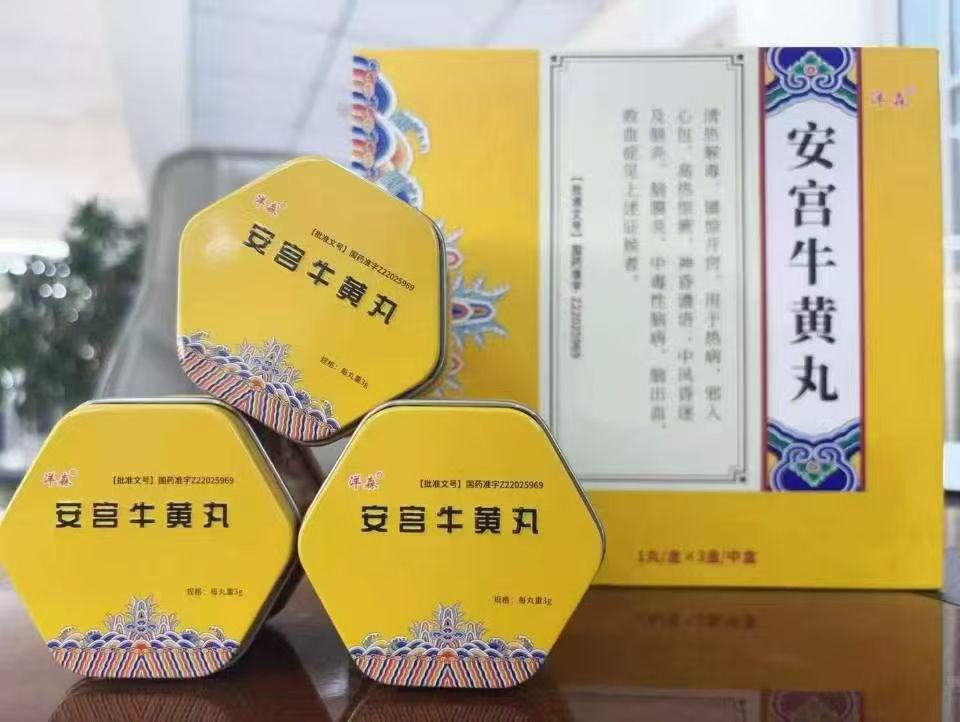
Introduction to Angong Niuhuang Pill
I. Overview
Angong Niuhuang Pill, first recorded in Systematized Identification of Warm Diseases written by Wu Jutong, a renowned physician of the Qing Dynasty, ranks first among the "Three Treasures for Warm Diseases" in traditional Chinese medicine. It is widely praised for its ability to "rescue acute conditions instantly and save the critically ill in moments." This formula primarily functions to clear heat, detoxify, calm convulsions, and restore consciousness, serving as a traditional emergency medicine in TCM for treating critical and severe conditions.
II. Composition
Angong Niuhuang Pill is formulated with multiple herbal ingredients, working synergistically to clear heat, detoxify, eliminate phlegm, and open the orifices:
| Category | Ingredients |
|---|---|
| Monarch Drugs | Niuhuang (Bovis Calculus) – clears the heart, detoxifies, eliminates phlegm, and opens orifices; Shexiang (Moschus) – revives consciousness and opens orifices |
| Minister Drugs | Shuiniujiao (Bubali Cornu Concentratum) – clears heat and cools blood; Huanglián (Coptidis Rhizoma), Huángqín (Scutellariae Radix), Zhīzǐ (Gardeniae Fructus) – clear fire from the triple energizers; Xiónghuáng (Realgar) – eliminates phlegm |
| Assistant Drugs | Zhūshā (Cinnabaris) – calms the mind; Zhēnzhū (Margarita) – calms the heart and spirit; Yùjīn (Curcumae Radix) and Bīngpiàn (Borneolum) – aromatically open orifices |
Note: The original formula used rhinoceros horn, natural Niuhuang (Bovis Calculus), and natural Shexiang (Moschus). Due to rhinoceros protection regulations, rhinoceros horn has been replaced by Shuiniujiao (Bubali Cornu Concentratum). Additionally, Niuhuang and Shexiang are now often substituted with artificially cultivated or in vitro cultured alternatives.
III. Functions and Indications
Clears heat, detoxifies, calms convulsions, and revives consciousness.
It is indicated for febrile diseases where pathogenic heat enters the pericardium, manifesting as high fever, convulsions, delirium, and coma. It is also used for coma due to stroke, as well as encephalitis, meningitis, toxic encephalopathy, cerebral hemorrhage, and septicemia when the above TCM syndrome patterns are present.
Main clinical applications:
| Indication | Description |
|---|---|
| Stroke with coma | Cerebral infarction or hemorrhage presenting as heat-induced closure syndrome |
| Febrile convulsions | High fever leading to generalized convulsions or coma |
| Various encephalopathies | Encephalitis, meningitis, toxic encephalopathy with internal heat and obstruction |
IV. Dosage and Administration
| Population | Dosage |
|---|---|
| Adults | 1 pill (3g specification) or 2 pills (1.5g specification), once daily |
| Children (under 3 years) | 1/4 pill (3g specification) or 1/2 pill (1.5g specification), once daily |
| Children (4–6 years) | 1/2 pill (3g specification) or 1 pill (1.5g specification), once daily |
Administration: Chew directly or dissolve in warm water before taking. For unconscious patients, dissolve in warm water and administer via nasogastric tube.
V. Key Precautions
1. Strict Syndrome Differentiation
Angong Niuhuang Pill is indicated only for heat-induced closure syndrome. Clinical manifestations include:
- Sudden coma
- Hemiplegia
- Flushed face and hot body
- Restlessness and agitation
- Red tongue with yellow greasy coating
Contraindicated in the following conditions:
| Condition | Manifestations |
|---|---|
| Cold-induced closure syndrome | Cyanotic complexion, cold body, pale tongue with slow pulse |
| Collapse syndrome | Profuse sweating, cold extremities, pale complexion, faint pulse |
Important: It is difficult for the general public to accurately identify TCM syndromes. Use should be under the guidance of a qualified TCM practitioner. Do not self-administer blindly.
2. Special Populations – Contraindications
- Pregnant women: Prohibited. The formula contains Shexiang (Moschus), which has a penetrating property that may harm the fetus.
- Patients with liver or kidney dysfunction: Use with caution. The formula contains Zhūshā (Cinnabaris) and Xiónghuáng (Realgar), which may increase the burden on the liver and kidneys.
- Athletes: Use with caution.
3. Medication Risks
- Do not use long-term: Contains Zhūshā (mercuric sulfide) and Xiónghuáng (arsenic disulfide). Excessive or prolonged use may lead to heavy metal toxicity.
- Discontinue once effective: This medicine is intended for acute emergency use. Stop administration once consciousness is restored.
4. Drug Interactions
Avoid concurrent use with nitrites, ferrous salts, nitrates, and sulfates, as these may increase toxicity.
5. Dietary Restrictions
During the course of medication, consume light foods and avoid spicy, greasy, and rich foods to prevent the accumulation of phlegm and fire.
VI. Common Misconceptions Clarified
| Misconception | Truth |
|---|---|
| Can be taken as a stroke prevention supplement | The formula is cold and potent, intended only for acute emergencies, not for prevention. |
| Seasonal use ensures health and safety | Has no health maintenance benefits; may instead deplete the body’s vital energy. |
| Suitable for all stroke patients | Only indicated for "heat-induced closure syndrome." Contraindicated for cold-induced closure syndrome and collapse syndrome. |
| Older pills are more effective | The aromatic ingredients may evaporate over time. Use within the expiration date. |
VII. Adverse Reactions
Improper use may lead to hypothermia. Cases of mercuric nephropathy and allergic reactions have been reported following use.
If symptoms such as chills, cold intolerance, pale complexion, cold sweats, or a faint pulse occur after administration, discontinue use immediately and seek medical attention.
Summary
Angong Niuhuang Pill is a valuable emergency medicine in traditional Chinese medicine, but it requires strict syndrome differentiation and appropriate use. It is not a health supplement or a preventive medication. Blind administration may worsen the condition. Please use under the guidance of a qualified TCM practitioner.
Indications for Angong Niuhuang Pill
1. Stroke with Coma (Cerebral Infarction, Cerebral Hemorrhage) – Heat‑Induced Closure Syndrome
Angong Niuhuang Pill is indicated for stroke patients presenting with heat‑induced closure syndrome, characterized by:
- Sudden coma
- Hemiplegia
- Flushed face and fever
- Restlessness or agitation
- Red tongue with yellow greasy coating
This pattern is commonly associated with acute ischemic stroke (cerebral infarction) or hemorrhagic stroke (cerebral hemorrhage) where internal heat obstructs the orifices.
2. Febrile Convulsions
The formula is used for febrile convulsions—seizures or coma induced by high fever—typically seen in:
- Severe infections with hyperpyrexia
- Febrile encephalopathy
- Pediatric febrile seizures where heat‑toxin affects the pericardium
In these cases, the pill acts to clear heat, calm convulsions, and restore consciousness.
3. Various Encephalopathies – Internal Heat with Obstruction
Angong Niuhuang Pill is also indicated for various brain disorders characterized by internal heat stagnation and obstruction of the orifices, including:
| Condition | Description |
|---|---|
| Encephalitis | Inflammation of the brain caused by viral or bacterial infection, often presenting with high fever, altered mental status, and seizures |
| Meningitis | Inflammation of the meninges, commonly with fever, headache, neck stiffness, and impaired consciousness |
| Toxic Encephalopathy | Brain dysfunction caused by toxins, metabolic disturbances, or systemic infections, often with delirium, confusion, or coma |
In these conditions, when the TCM pattern aligns with internal heat stagnating and obstructing the pericardium, the formula is used to:
- Clear heat and detoxify
- Open the orifices and revive consciousness
- Calm convulsions
Summary Table
| Indication | TCM Pattern | Key Symptoms |
|---|---|---|
| Stroke (cerebral infarction / hemorrhage) | Heat‑induced closure syndrome | Sudden coma, hemiplegia, flushed face, fever, red tongue with yellow coating |
| Febrile convulsions | Heat‑toxin affecting pericardium | High fever, generalized seizures, loss of consciousness |
| Encephalopathy (encephalitis, meningitis, toxic encephalopathy) | Internal heat stagnation with obstruction | Fever, altered mental status, delirium, coma, seizures |
“In distinguished Chinese households, one medicine is quietly kept—not for daily use, but for the moment it might save a life.”
Angong Niuhuang Pill. For over two centuries, it has been revered as the foremost emergency remedy in traditional Chinese medicine. It is not a supplement for everyday wellness, but a lifeline in critical moments—stroke, high fever, convulsions, sudden collapse. Stored deep in the family medicine cabinet, it represents a quiet yet profound philosophy: to be prepared for the unforeseen, and to cherish life with the utmost respect.