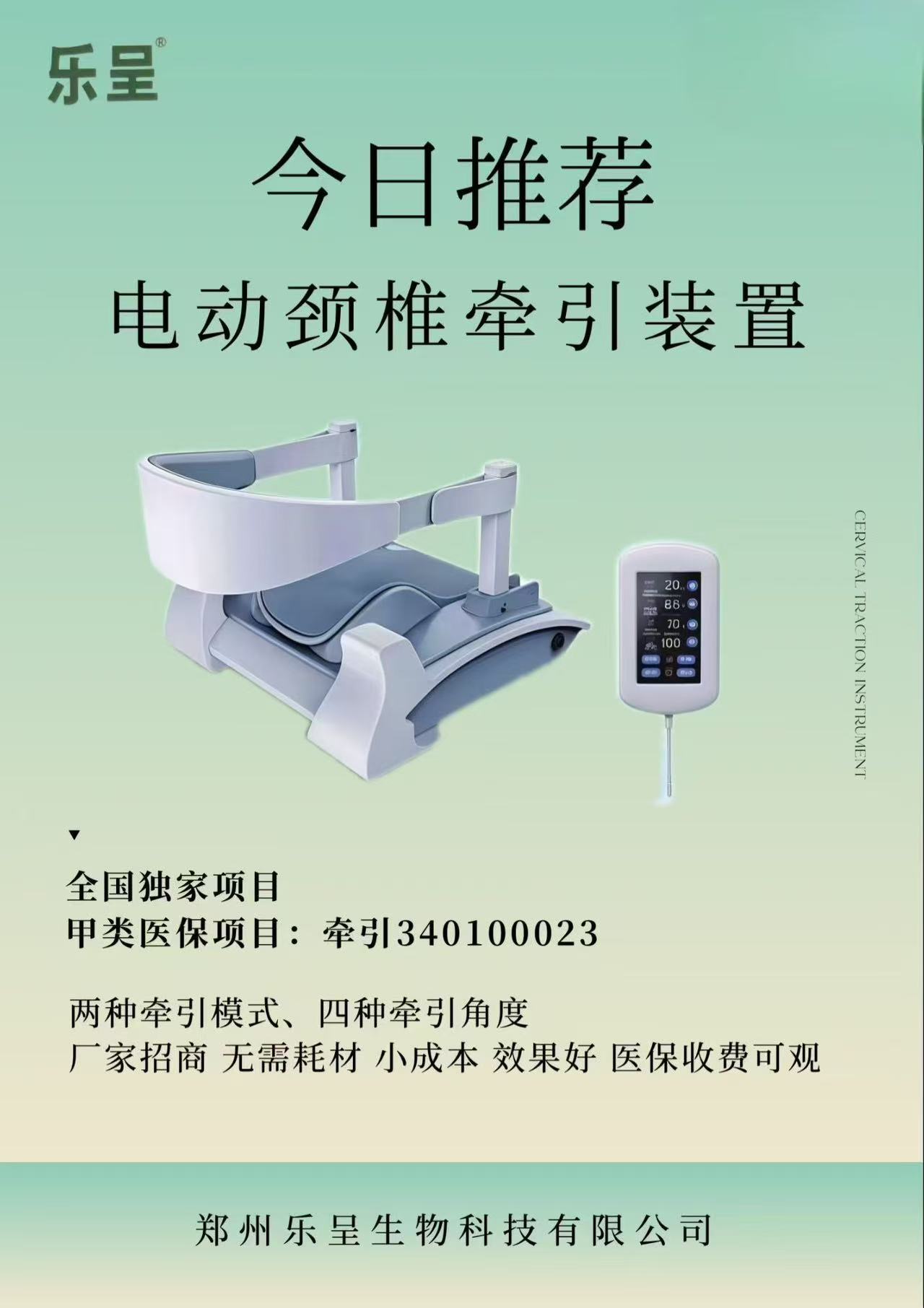
Electric Cervical Traction Device - Product and Technical Summary Report
1. Product Overview
The Electric Cervical Traction Device is a modern physical therapy apparatus that integrates the traditional Chinese medicine theory of "traction" with contemporary electromechanical technology. It is widely used in TCM rehabilitation departments, orthopedics, pain management clinics, and physiotherapy centers, primarily for the treatment of cervical spine-related disorders.
2. Core Components and Working Principle
- Structural Components:Main Unit (Control Console): Houses the motor and control system for setting traction parameters.Traction Force Sensor: Monitors and provides real-time feedback on traction force to ensure treatment safety.Suspension Device and Harness: Typically includes a head halter to securely and comfortably stabilize the patient's head.Seat/Bed: Supports the patient in a sitting or supine position during treatment.Intelligent Control Panel: Features an LCD display for precise setting of traction force, time, mode, and other parameters.
- Working Principle: The control console drives a motor to generate linear pulling force based on preset parameters (e.g., force, duration, mode). This force is applied smoothly and consistently along the longitudinal axis of the patient's cervical spine via the suspension system and harness to achieve the therapeutic traction effect.
3. Key Functions and Treatment Modes
- Continuous Traction: Applies a constant, unchanging traction force. Primarily used to relieve muscle spasms and acute pain.
- Intermittent Traction: The traction force alternates rhythmically between a preset value and zero (or a lower holding force). This is the most common mode, mimicking manual techniques. It is often better tolerated by patients and helps improve local blood circulation and release adhesions.
- Combined/Programmed Modes: Integrates continuous and intermittent traction, or features automated programs with gradual force increment and decrement phases.
- Angled Traction: The direction of pull can be adjusted to flexion, extension, or neutral positions based on cervical curvature or the affected segment, allowing for more targeted treatment.
- Safety Features: Includes overload protection, emergency stop buttons, and automatic force release upon exceeding preset limits.
4. Primary Clinical Applications (Indications)
- Radiculopathic Cervical Spondylosis: For patients with radiating arm pain, numbness, or weakness due to nerve root compression from disc herniation or osteophyte formation.
- Neck-Type Cervical Spondylosis: For primary symptoms like neck pain, stiffness, and limited range of motion.
- Vertebral Artery Type Cervical Spondylosis (Selected Cases): May help alleviate symptoms like dizziness or vertigo caused by cervical instability or uncinate process hyperplasia stimulating the vertebral artery, after excluding severe bony compression or other contraindications.
- Cervical Disc Herniation (excluding massive or sequestrated types).
- Cervical Facet Joint Dysfunction.
- Neck Muscle Strain or Spasm.
- Auxiliary Correction of loss or reversal of the normal cervical lordosis.
5. Core Advantages (vs. Manual Traction)
- Precise & Controllable: Traction force, time, angle, and mode are digitally and precisely settable, allowing for reproducible and consistent treatment parameters.
- Safe & Stable: Incorporates multiple safety protections and provides smooth, consistent traction force output, avoiding sudden or erratic pulls.
- Efficient: Frees the therapist's hands, allowing for potentially managing multiple patients or concurrent tasks.
- Objective & Documentable: Treatment parameters can be recorded and tracked, facilitating outcome assessment, regimen adjustment, and documentation.
6. Critical Precautions and Contraindications (Warnings)
Must be used under the assessment, prescription, and supervision of a qualified physician or licensed therapist. Self-administration is strictly prohibited.
- Absolute Contraindications:Tumors, tuberculosis, or severe infection in or around the cervical spine.Severe osteoporosis, recent cervical fracture, dislocation, or severe spinal instability/deformity.Significant intraspinal space-occupying lesions, free disc fragments, or severe spinal cord compression (Myelopathic cervical spondylosis is typically a contraindication).Acute phase of severe uncontrolled hypertension, certain heart conditions, or active hemorrhagic disorders.Known Carotid Sinus Hypersensitivity.
- Relative Contraindications & Precautions:Discontinue if symptoms worsen significantly after traction.Use with extreme caution in the elderly, frail individuals, or pregnant patients.Begin with low "doses" (low force, short duration) during initial sessions to allow for patient adaptation.Stop immediately if dizziness, palpitations, nausea, syncope, or increased pain occurs during treatment.
7. Selection and Usage Recommendations
- Certification & Compliance: Ensure the device is a Class II Medical Device registered with the relevant national regulatory authority (e.g., NMPA in China, FDA in the US), possessing valid manufacturing and product registration certificates.
- Core Specifications: Evaluate traction force range (typically 0-30kg or wider), control precision, variety of treatment modes, and robustness of the safety protection system.
- Comfort & Ergonomics: The harness should be made of soft, breathable, hypoallergenic material, and the head halter should be easily adjustable to fit different head sizes securely and comfortably.
- Smart Features: Modern devices may offer features like Bluetooth connectivity, preset treatment protocol storage, patient data management, and remote monitoring capabilities.
- Professional Training: Operators must receive comprehensive professional training to thoroughly understand indications, contraindications, device operation, and patient assessment/monitoring.
Summary
The Electric Cervical Traction Device represents a significant and mature technological tool in modern rehabilitation medicine and TCM practice. It can effectively alleviate symptoms associated with various cervical pathologies through quantifiable and controllable biomechanical action. However, it is inherently a prescription-based therapeutic modality. The three cornerstones for ensuring its safety and efficacy are: 1) Strict patient selection based on accurate diagnosis, 2) Individualized treatment parameter setting, and 3) Standardized operation by trained professionals. Patients must receive this treatment exclusively in qualified professional medical institutions.
电动颈椎牵引仪产品与技术总结报告
1. 产品概述
电动颈椎牵引仪是一款融合中医传统“牵引”理论与现代机电技术的现代化物理治疗设备。广泛应用于中医康复科、骨科、疼痛科及理疗中心,主要用于治疗颈椎相关疾患。
2. 核心结构与工作原理
- 结构组成:主机(控制台): 内置电机与控制系统,用于设定牵引参数。牵引力传感器: 实时监测并反馈牵引力,确保治疗安全。悬吊装置与固定带: 通常包含头套,用于安全、舒适地固定患者头部。座椅/床: 支持患者坐位或仰卧位进行治疗。智能控制面板: 配备LCD显示屏,可精确设定牵引力、时间、模式等参数。
- 工作原理: 控制台根据预设参数(如力值、时间、模式),驱动电机产生线性拉力。该力通过悬吊系统和固定带,沿患者颈椎纵轴方向平稳、持续地施加,从而达到牵引治疗目的。
3. 核心功能与治疗模式
- 持续牵引: 施加恒定的、无变化的牵引力。主要用于缓解肌肉痉挛和急性疼痛。
- 间歇牵引: 牵引力在有预设值与零(或较低保持力)之间进行节律性交替。此为最常用模式,模拟人工手法,患者更易耐受,有助于改善血液循环、松解粘连。
- 组合模式: 融合持续与间歇牵引,或具有牵引力自动渐增/渐减的程序化方案。
- 角度牵引: 可根据颈椎曲度或病变节段,调整牵引方向为前屈、后伸或中立位,实现针对性治疗。
- 安全保障: 具备过载保护、紧急停止按钮、超限自动释放等功能。
4. 主要临床应用(适应症)
- 神经根型颈椎病(因椎间盘突出或骨赘形成压迫神经根导致上肢放射痛或麻木者)。
- 颈型颈椎病(主要症状为颈痛、僵硬、活动受限)。
- 椎动脉型颈椎病(选择性病例,在排除严重骨性压迫后,可能有助于缓解因颈椎失稳或钩椎关节增生刺激椎动脉引发的部分症状)。
- 颈椎间盘突出症(除外巨大或游离型突出)。
- 颈椎小关节功能紊乱。
- 颈肌劳损或痉挛。
- 辅助矫正颈椎生理曲度变直或反弓。
5. 核心优势(对比人工牵引)
- 精确可控: 牵引力、时间、角度、模式均可数字化精确设定,治疗参数可重复。
- 安全稳定: 多重安全保护,牵引力输出平稳均匀,避免忽大忽小或突然变化。
- 高效省力: 解放治疗师双手,可同时管理多位患者。
- 疗效客观: 治疗参数可记录,便于疗效评估与方案调整。
6. 关键注意事项与禁忌症(警告)
必须在合格医师或治疗师评估和指导下使用,严禁自行操作。
- 绝对禁忌症:颈椎及邻近部位肿瘤、结核或严重感染。严重骨质疏松、颈椎骨折、脱位或严重畸形。椎管内占位性病变、游离椎间盘碎片、或严重脊髓受压(脊髓型颈椎病通常慎用或禁用)。严重高血压、心脏病、出血性疾病急性期。颈动脉窦过敏者。
- 相对禁忌与注意事项:牵引后症状显著加重者应停用。年老体弱、孕妇等人群慎用。初次治疗宜从“低剂量”(小力值、短时间)开始,以利患者适应。治疗过程中若出现头晕、心慌、恶心或疼痛加剧,应立即停止。
7. 选型与使用建议
- 资质认证: 确保产品为在国家药品监督管理局(NMPA)注册的二类医疗器械,具备有效的生产许可证和产品注册证。
- 核心规格: 关注牵引力范围(通常0-30kg或更宽)、控制精度、模式多样性及安全保护系统。
- 舒适性与适配性: 固定带材质应柔软透气,头套应可调节以适应不同头围。
- 智能特性: 现代设备可能具备蓝牙连接、治疗方案存储、远程管理等智能化功能。
- 专业培训: 操作人员必须接受专业培训,充分理解适应症、禁忌症及设备操作。
总结
电动颈椎牵引仪是现代中医康复领域中一项重要且成熟的技术设备。它通过量化可控的生物力学作用,能有效缓解多种颈椎病症状。然而,它本质上是一种处方疗法。确保其安全有效的三大基石是:严格的患者筛选、个体化的参数设定以及规范化的操作。 患者必须在专业医疗机构内接受此项治疗。